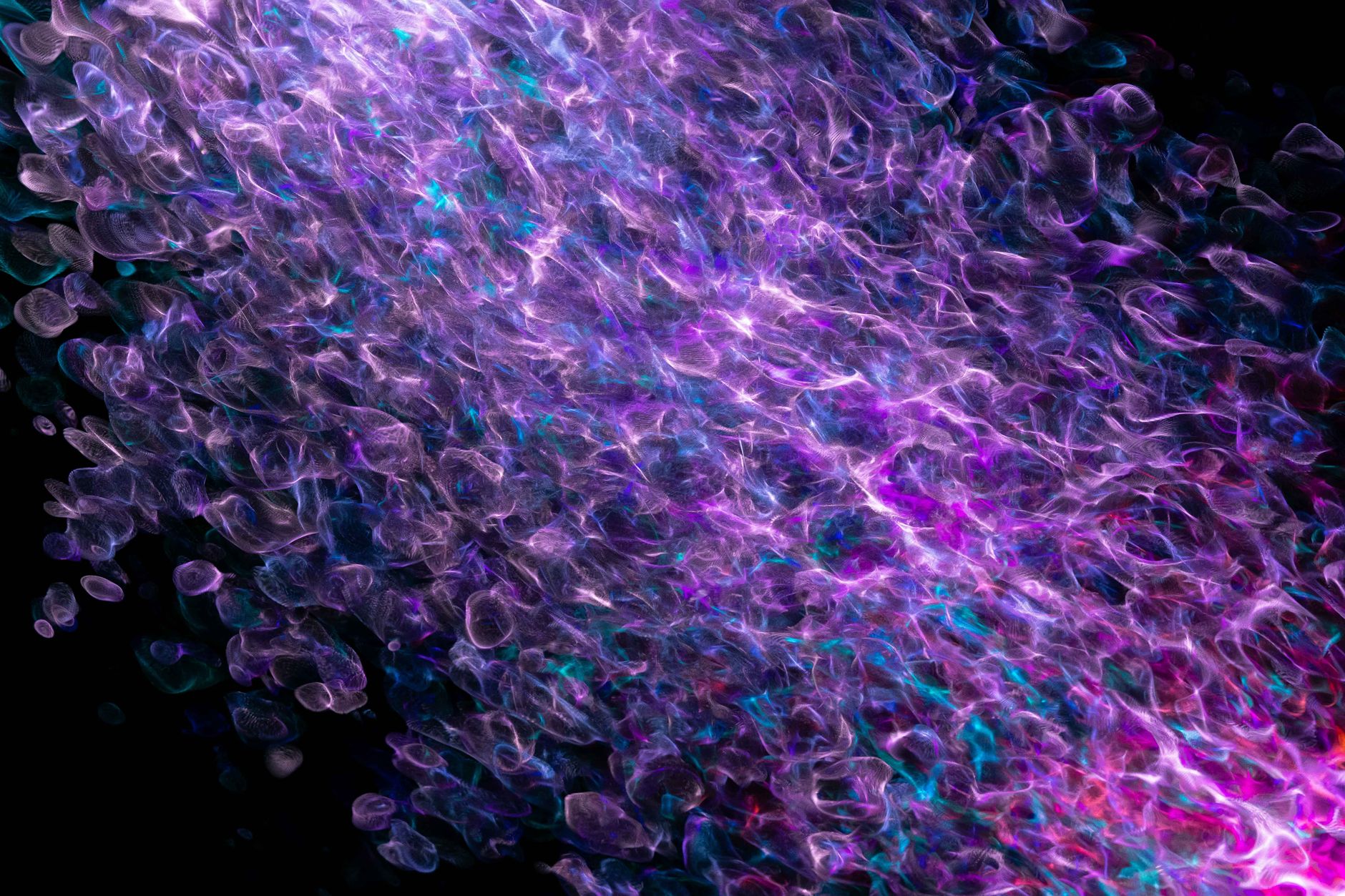
Gaseous stimulated Raman scattering has made a significant breakthrough in laser design, opening new possibilities for technology and research. This development is poised to enhance various applications in the field.
What is Gaseous Stimulated Raman Scattering?
Gaseous stimulated Raman scattering (GSRS) is an advanced optical process that occurs when a laser beam interacts with gas molecules, leading to the amplification of specific wavelengths of light. This phenomenon is a result of the energy transfer between the photons of the laser and the vibrational modes of the gas molecules, creating a new wavelength that is both coherent and intense.
GSRS has garnered significant attention in the scientific community due to its potential applications in various fields. Some key aspects include:
- Efficient Energy Conversion: GSRS can convert laser energy into other wavelengths with high efficiency, making it ideal for applications in spectroscopy.
- Wide Range of Applications: It has potential uses in environmental monitoring, medical diagnostics, and telecommunications.
- Improved Laser Systems: Recent advancements in laser design have significantly enhanced the capabilities and practicality of GSRS.
With ongoing research and development, gaseous stimulated Raman scattering may prove to be a pivotal technology in the future of laser applications.
Recent Breakthrough in Laser Design
Recent advancements in laser design have opened new avenues in the field of gaseous stimulated Raman scattering. Researchers have successfully developed innovative laser systems that enhance the efficiency and effectiveness of this phenomenon. These breakthroughs are paving the way for a myriad of applications, ranging from telecommunications to medical imaging.
The new designs focus on optimizing the interaction between laser light and gas molecules, leading to improved scattering processes. This results in:
- Increased output power: The latest designs allow for higher energy outputs, which can significantly enhance various applications.
- Wider wavelength range: The ability to generate a broader spectrum of wavelengths expands the potential uses of these lasers.
- Improved stability: Enhanced stability in laser performance ensures more reliable operation in practical settings.
As researchers continue to refine their approaches, the potential impact of gaseous stimulated Raman scattering on technology and science grows, suggesting a bright future for this innovative method.
Implications for Future Technologies
The advancements in gaseous stimulated Raman scattering present profound implications for future technologies. As researchers continue to explore this phenomenon, they are uncovering potential applications that could revolutionize various fields.
One significant area of impact is in telecommunications. Enhanced laser systems utilizing gaseous stimulated Raman scattering could lead to faster and more efficient data transmission, enabling higher bandwidth and improved connectivity across networks.
Moreover, the medical field stands to benefit immensely. The precision of lasers developed through this breakthrough can facilitate more accurate imaging techniques and targeted therapies, potentially leading to earlier diagnosis and better treatment outcomes.
In the realm of environmental monitoring, the refined detection capabilities offered by these laser technologies could improve the accuracy of pollutant measurements, aiding in the fight against climate change.
As these technologies evolve, collaboration between scientists, engineers, and industry leaders will be essential to fully realize the potential of gaseous stimulated Raman scattering and its contributions to a sustainable and technologically advanced future.
How Does Raman Scattering Work?
Raman scattering is a phenomenon that occurs when light interacts with molecular vibrations in a medium. When a photon collides with a molecule, it can lose or gain energy, leading to a change in the wavelength of the scattered light. This energy exchange is what makes Raman scattering a powerful tool for analyzing materials.
In the context of gaseous stimulated Raman scattering, the process is enhanced in a gas medium, allowing for more efficient energy transfer. The stimulated component occurs when an incoming photon stimulates the emission of additional photons from the excited molecules, resulting in a coherent beam of light.
Several factors contribute to the efficiency of Raman scattering, including:
- High intensity of the incident light: Stronger light sources increase the likelihood of photon interactions.
- Optimal pressure and temperature conditions: These parameters can significantly affect the scattering process.
- Specific gas composition: Different gases exhibit unique vibrational modes that can enhance or dampen scattering effects.
As researchers further explore these dynamics, the implications for future technologies could be profound.
Key Players in Laser Research
In the rapidly evolving field of laser research, several key players are making significant contributions to the advancement of gaseous stimulated Raman scattering. These organizations and institutions are at the forefront of developing innovative technologies that harness the power of this phenomenon.
- National Laboratories: Various national laboratories across the globe are conducting extensive research on laser capabilities, focusing on enhancing the efficiency and effectiveness of gaseous stimulated Raman scattering.
- Universities: Leading universities have established dedicated research programs that explore the applications and underlying physics of Raman scattering, fostering a new generation of scientists.
- Private Sector: Companies specializing in photonics and laser technologies are investing heavily in research and development, aiming to commercialize breakthroughs related to gaseous stimulated Raman scattering.
The collaborative efforts among these players not only aim to push the boundaries of laser technology but also hold the potential to revolutionize industries ranging from telecommunications to medical applications. As the research progresses, the impact of gaseous stimulated Raman scattering on future technology remains a focal point of exploration.
Applications of Raman Scattering
Gaseous stimulated Raman scattering has opened up a plethora of applications across various fields, showcasing its versatility and potential for innovation. The following are some notable applications:
- Medical Imaging: This technology enhances imaging techniques, allowing for improved diagnostics and non-invasive procedures.
- Environmental Monitoring: Utilizing gaseous stimulated Raman scattering enables precise detection of pollutants and greenhouse gases, contributing to environmental protection efforts.
- Telecommunications: The ability to manipulate light at different wavelengths aids in the development of advanced optical communication systems, expanding bandwidth and data transmission capabilities.
- Material Science: Researchers can utilize Raman scattering to study material properties, leading to the development of new materials with unique characteristics.
- Aerospace Engineering: This technique allows for real-time monitoring of combustion processes in jet engines, improving efficiency and safety.
As industries continue to explore the benefits of gaseous stimulated Raman scattering, the potential for groundbreaking advancements remains promising.
Challenges in Gaseous Laser Development
The development of gaseous stimulated Raman scattering (GSRS) presents several challenges that researchers must overcome to fully realize its potential. These challenges primarily stem from the complexities involved in the interaction between light and gas molecules.
Some of the notable challenges include:
- Efficiency: Achieving high efficiency in energy conversion remains a significant hurdle.
- Stability: Maintaining stable laser output under varying conditions is essential for practical applications.
- Material Limitations: Finding suitable gases that can sustain the desired stimulated Raman scattering without degradation is crucial.
- Technological Integration: Integrating GSRS technology with existing laser systems poses compatibility issues.
Furthermore, the need for precise control over the parameters governing GSRS complicates the design process. Researchers are actively exploring innovative solutions to address these challenges, as the successful implementation of gaseous stimulated Raman scattering could revolutionize the field of laser technology and its many applications.
Expert Opinions on Recent Findings
Experts in the field have shared their insights on the recent advancements in gaseous stimulated Raman scattering, asserting that this breakthrough could redefine laser technology. Dr. Amelia Hart, a leading physicist, emphasized the potential of this phenomenon to enhance the efficiency of laser systems. “The implications of gaseous stimulated Raman scattering extend beyond basic research; they could lead to practical applications in various industries,” she stated.
Moreover, Dr. Raj Patel, a renowned engineer, noted that the innovative designs emerging from this research might address longstanding challenges in laser development. He remarked, “This could be the leap forward we’ve been waiting for in high-intensity laser applications.”
In contrast, some experts urge caution. Dr. Linda Chen raised concerns about the scalability of these new laser designs. “While the initial results are promising, we must ensure that the technology can be effectively implemented in real-world scenarios,” she cautioned.
Overall, the community is abuzz with excitement, while also recognizing the need for further studies to fully understand the implications of gaseous stimulated Raman scattering.
Photo by Merlin Lightpainting on Pexels
One thought on “Is Gaseous Stimulated Raman Scattering the Best Breakthrough?”