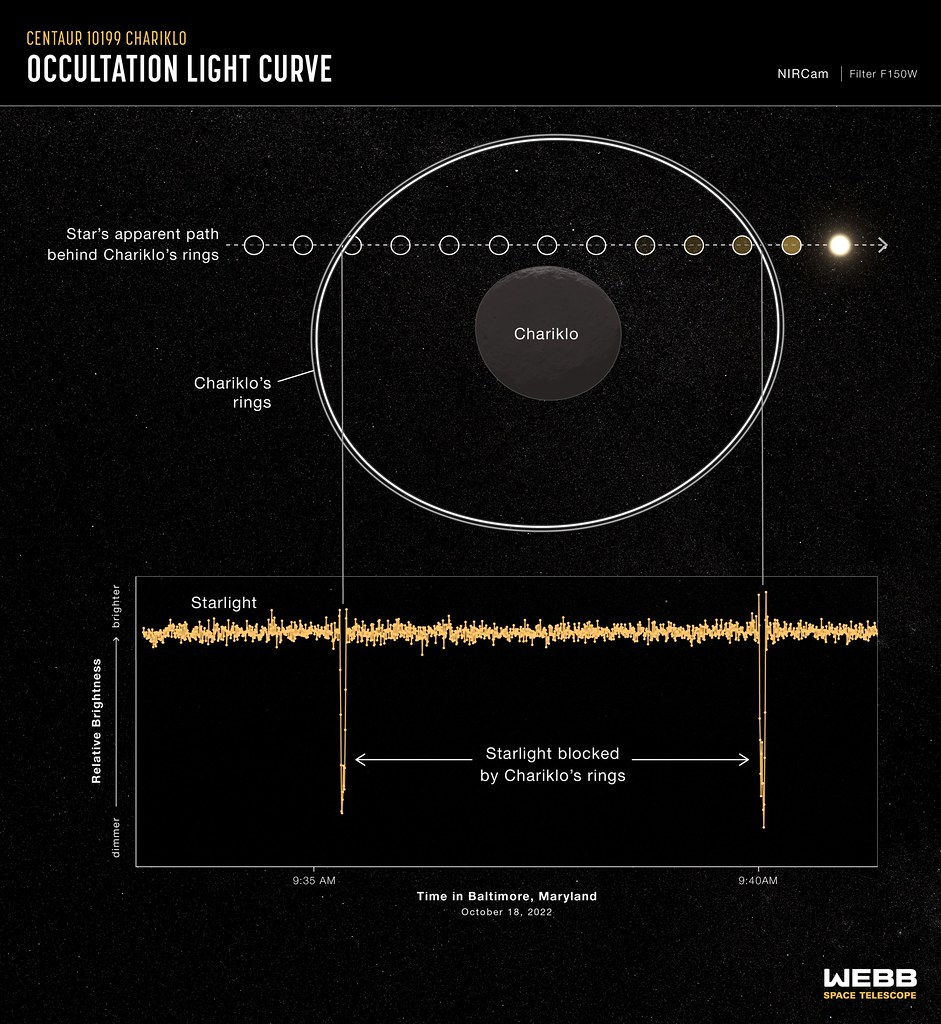
Chariklo’s Rings are evolving, showcasing fascinating changes that astronomers are eager to study. This celestial phenomenon offers a deeper understanding of ring systems beyond Saturn.
What Are Chariklo’s Rings?
Chariklo, a centaur asteroid located between Saturn and Uranus, is unique for having a system of rings. These rings, known as Chariklo’s Rings, were first discovered in 2013 and have since intrigued astronomers. The rings are composed of ice and dust particles, creating a striking contrast against the dark surface of Chariklo.
The main ring is surrounded by a fainter outer ring, which has been the subject of ongoing research. Recent studies suggest that these rings may be evolving due to gravitational interactions with nearby moons and the surrounding environment.
Scientists believe that understanding Chariklo’s Rings could provide insights into the formation and dynamics of planetary ring systems, enhancing our knowledge of celestial mechanics and the evolution of small bodies in the solar system.
The Science Behind Ring Formation
The formation of Chariklo’s rings is a fascinating subject that sheds light on celestial mechanics. Scientists believe that the rings are primarily composed of water ice and dust particles, which come together due to gravitational forces.
Several factors contribute to the unique structure and stability of Chariklo’s rings:
- Gravitational Interactions: The presence of Chariklo’s moons plays a crucial role in maintaining the rings’ shape and preventing the particles from dispersing.
- Material Composition: The rings are thought to be made of various sizes of ice and rock, which influences their reflective properties.
- Dynamic Processes: Over time, the rings may evolve due to collisions between particles and external influences, leading to changes in their appearance.
This ongoing evolution of Chariklo’s rings continues to be a significant area of research in planetary science.
Recent Discoveries About Chariklo
Recent discoveries about Chariklo’s Rings have shed new light on their dynamic nature. Observations from telescopes have revealed that these rings are not static; rather, they are evolving over time. Scientists have noted changes in the composition and structure of the rings, suggesting that they are influenced by the gravitational forces of Chariklo itself, as well as interactions with nearby celestial bodies.
Further studies have indicated that:
- The rings may contain a mix of ice and dust particles, which can shift and change due to varying temperatures and pressures.
- New data suggests that smaller moonlets within the rings might be playing a significant role in their evolution.
- Future missions could provide deeper insights into the mechanisms driving these changes.
Understanding Chariklo’s Rings is crucial for grasping the complexities of ring systems in our solar system.
How Do Chariklo’s Rings Compare?
When examining how Chariklo’s rings compare to other celestial ring systems, several intriguing differences emerge. Unlike Saturn’s iconic rings, which are primarily composed of ice and rock, Chariklo’s rings exhibit a unique composition that includes a significant amount of dust and ice particles. This distinct mixture contributes to their darker appearance and the dynamic nature of their structure.
Furthermore, Chariklo’s rings are also smaller in scale, with a diameter of about 7 kilometers, making them an interesting subject for astronomers. Studies suggest that the rings may even be evolving, possibly influenced by the interactions with nearby moons. This evolution raises questions about the lifespan of such ring systems and their potential for change over time.
In summary, the characteristics of Chariklo’s rings offer a fascinating contrast to more well-known ring systems, highlighting the diversity of celestial formations.
Implications for Future Research
The recent discoveries about Chariklo’s Rings have significant implications for future research in planetary science and astrophysics. Understanding the formation and evolution of these unique rings can provide insights into the processes that govern ring systems across the solar system.
Researchers are now encouraged to explore a variety of questions, such as:
- How do the dynamics of Chariklo’s Rings compare to those of larger ring systems, like Saturn?
- What role do small celestial bodies play in shaping these rings over time?
- Can studying Chariklo’s Rings reveal information about the history of other celestial bodies?
Ultimately, the evolution of Chariklo’s Rings not only enhances our understanding of this centaur but also opens new avenues for investigating the complexities of ring formation throughout the universe.
The Importance of Studying Chariklo
Understanding the significance of Chariklo’s Rings extends beyond mere curiosity; it offers insights into the dynamic processes of celestial bodies. These rings are a unique feature among centaurs, providing a rare opportunity to study ring formation and evolution in the outer solar system.
Researchers believe that examining Chariklo’s Rings can shed light on the conditions that lead to ring formation, which may apply to other distant celestial bodies.
Additionally, these rings serve as a natural laboratory for testing theories of planetary formation and the evolution of material in space.
As we gather more data from ongoing observations, the implications for future research are profound, potentially reshaping our understanding of not just Chariklo, but also the broader mechanics of planetary systems.
In summary, studying Chariklo’s Rings is essential for advancing our knowledge of celestial phenomena.
What’s Next for Chariklo’s Rings?
As researchers continue to explore Chariklo’s Rings, the next steps involve deeper analysis and advanced technology. One key area of focus is understanding the composition of the ring particles, which could reveal insights into the formation and evolution of these unique structures.
Additionally, scientists are looking to enhance observational techniques to monitor changes in Chariklo’s Rings over time. This data will be crucial in determining how these rings may evolve in the future and what factors influence their stability.
Moreover, comparisons with other celestial bodies, such as Saturn’s rings, will provide valuable context for Chariklo’s Rings. By expanding our knowledge in this area, researchers aim to uncover the broader implications for planetary science and the dynamics of ring systems across the solar system.
By James Webb Space Telescope via Openverse


One thought on “Chariklo’s Rings: The Real Evolution You Need to Know”